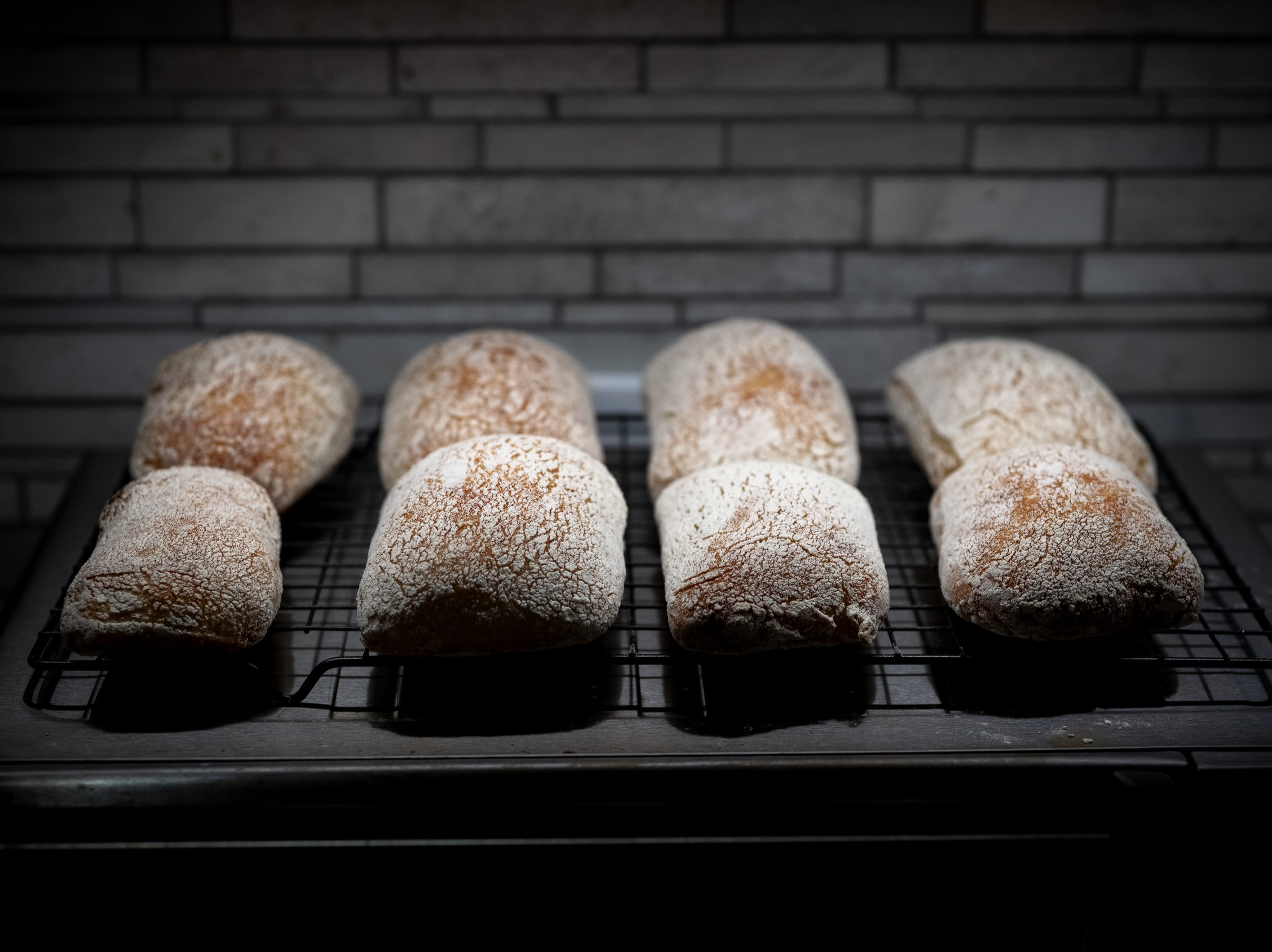
This photograph beautifully captures a batch of ciabatta loaves resting on a cooling rack. The lighting is dramatic, casting shadows that accentuate the flour-dusted surface and craggy crusts. The loaves exhibit a classic ciabatta shape with a slightly irregular form, indicative of the high hydration. The crusts are lightly golden with a fine network of cracks, suggesting a good oven spring and proper fermentation. However, the loaves would benefit from more pronounced color variation to enhance visual appeal.
**Whispers of Flour** This photograph beautifully captures a batch of ciabatta loaves resting on a cooling rack. The lighting is dramatic, casting shadows that accentuate the flour-dusted surface and craggy crusts. The loaves exhibit a classic ciabatta shape with a slightly irregular form, indicative of the high hydration. The crusts are lightly golden with a fine network of cracks, suggesting a good oven spring and proper fermentation. However, the loaves would benefit from more pronounced color variation to enhance visual appeal. The flour-dusted crust on ciabatta helps in creating a unique textural contrast. During baking, the flour inhibits full crust development, resulting in a soft, almost tender exterior. This is a traditional technique that complements the ciabatta's airy crumb structure, allowing the crust to remain thin and crisp. The term 'ciabatta' means 'slipper' in Italian, a nod to the loaf's distinctive shape. This name was given as a playful reference to its resemblance to a comfortable old slipper, emphasizing its rustic and homey appeal. Compared to previous bakes, these loaves show an improvement in oven spring and crumb uniformity. The flour dusting is more consistent, contributing to a more even crust texture. However, further experimentation with baking time could enhance the depth of crust color.