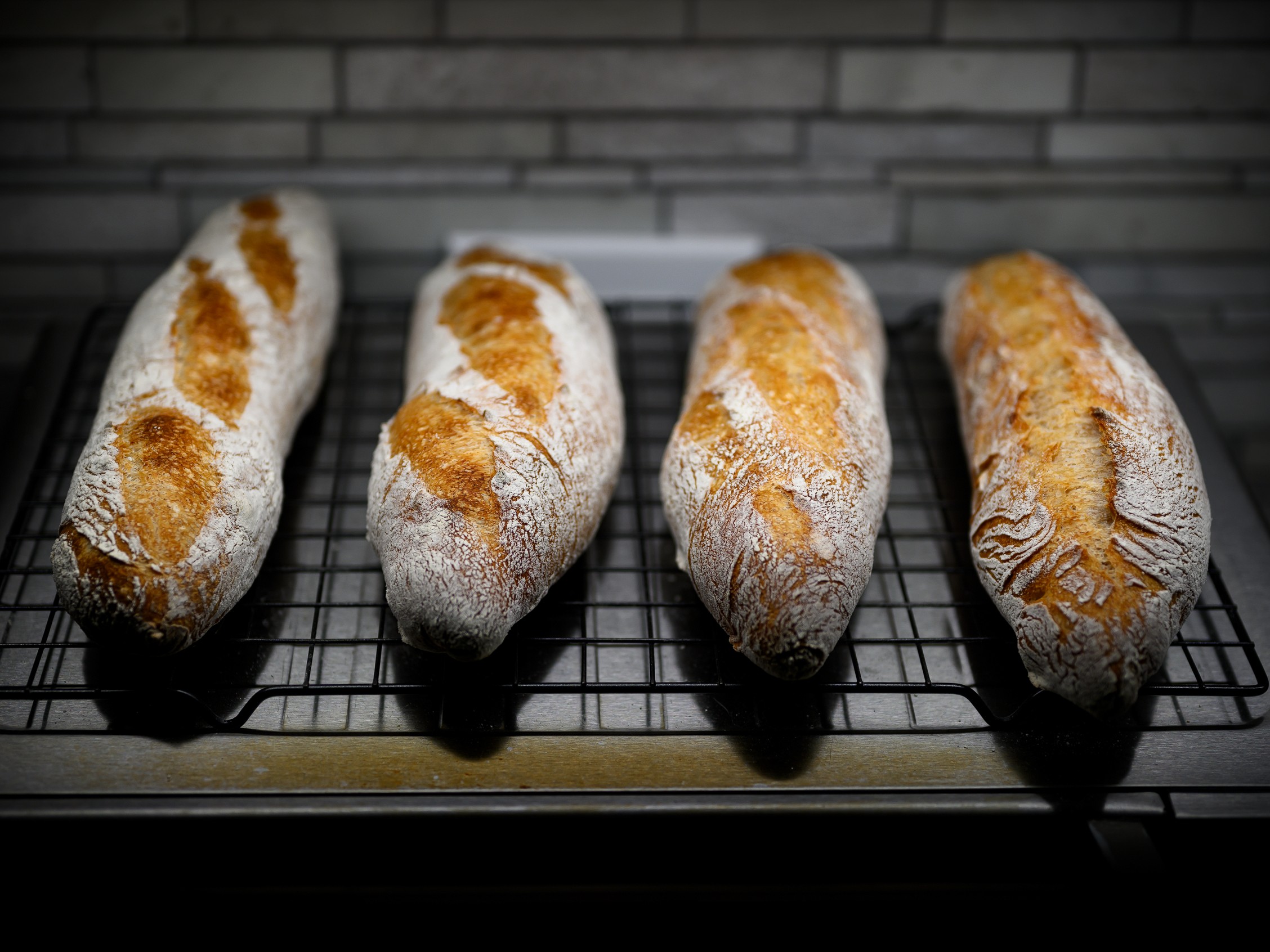
The lighting in this photo is moody, emphasizing the textured surfaces and golden brown tones of the sourdough baguettes. The crust shows a pleasing, irregular pattern with varied golden hues, indicative of proper caramelization. Scoring is mostly effective, resulting in some decent bloom, although the ear formation could be more pronounced. The shape is consistent across each baguette with satisfying symmetry, though one appears slightly elongated. Fermentation seems well-timed, controlling spread and maintaining structure.
**Wheat's Rustic Notes** The lighting in this photo is moody, emphasizing the textured surfaces and golden brown tones of the sourdough baguettes. The crust shows a pleasing, irregular pattern with varied golden hues, indicative of proper caramelization. Scoring is mostly effective, resulting in some decent bloom, although the ear formation could be more pronounced. The shape is consistent across each baguette with satisfying symmetry, though one appears slightly elongated. Fermentation seems well-timed, controlling spread and maintaining structure. The use of whole wheat flour introduces extra complexity in fermentation due to bran content. Bran can impede gluten formation, leading to denser bread if not managed. To counteract this, extended autolyse and gentle folding can enhance gluten development, accommodating the bran without sacrificing structure. The sourdough's natural fermentation relies on the symbiotic relationship between yeast and lactic acid bacteria, similar to the symbiotic partnerships found in coral reefs, where different species coexist to build a stable environment. Compared to previous bakes, these baguettes show improved color uniformity and more controlled shapes. Past issues with erratic loaf sizes have been addressed, though ear development remains consistent with similar patterns evident before. Continuing work on scoring technique could enhance aesthetic and structural aspects further.