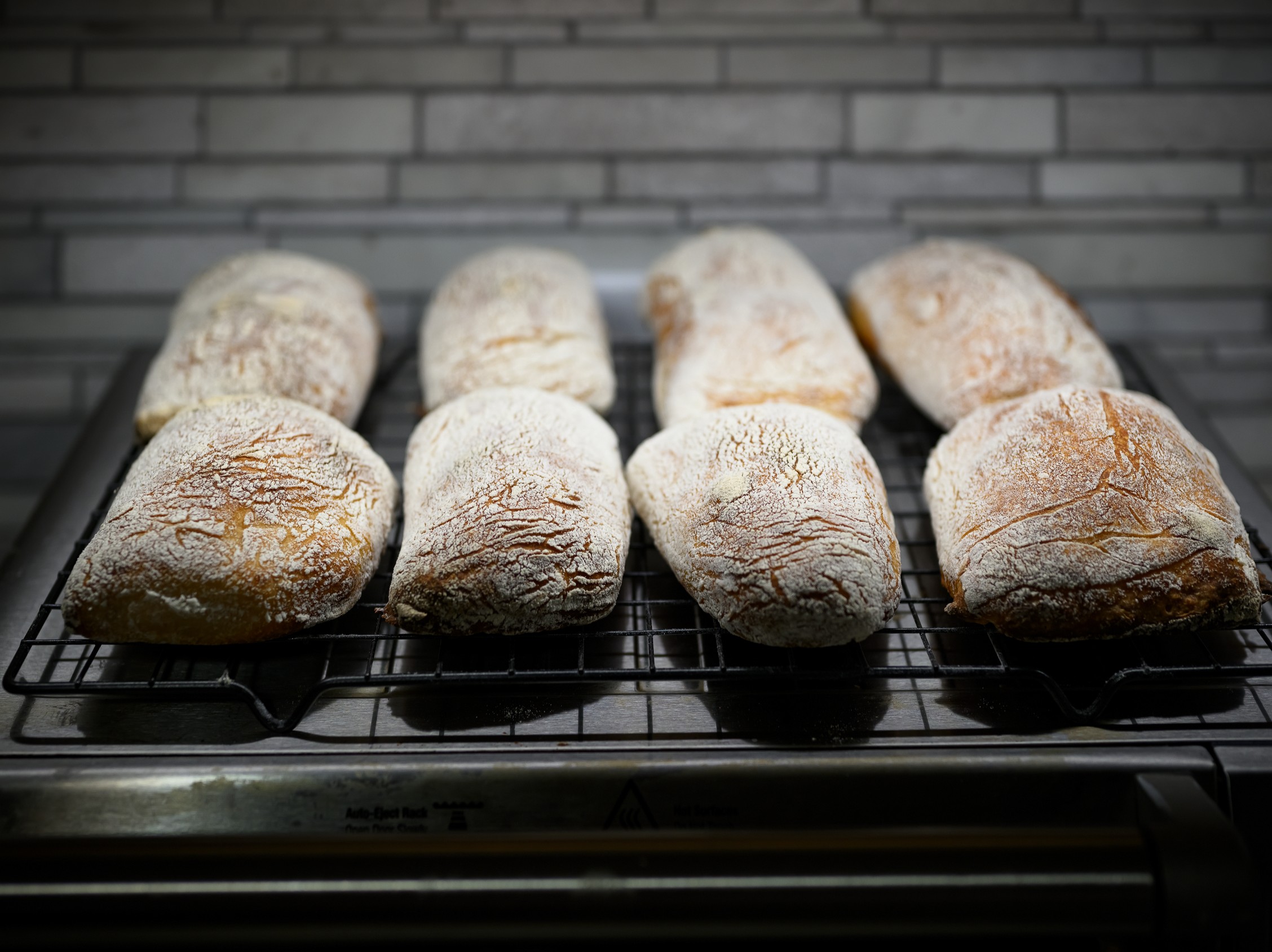
The photographs reveal a batch of olive oil ciabatta loaves with a deeply burnished crust and an intricate pattern of flour-dusted cracks. The lighting focuses on the texture, emphasizing the characteristic open crumb typical of high-hydration doughs. The loaves exhibit an even, golden color, suggesting a well-executed oven spring. However, the scoring could be more pronounced to enhance the bloom, a subtle detail that would add visual intrigue. The shape is uniform, but more asymmetry might elevate their artisanal appearance.
**Threads of Flavor** The photographs reveal a batch of olive oil ciabatta loaves with a deeply burnished crust and an intricate pattern of flour-dusted cracks. The lighting focuses on the texture, emphasizing the characteristic open crumb typical of high-hydration doughs. The loaves exhibit an even, golden color, suggesting a well-executed oven spring. However, the scoring could be more pronounced to enhance the bloom, a subtle detail that would add visual intrigue. The shape is uniform, but more asymmetry might elevate their artisanal appearance. Flour-dusted surfaces on ciabattas form due to evaporation as steam hits cold dough, causing the excess surface flour to crack and expose the crust beneath. This visual texture emphasizes the fermentation gases that give the crumb its light, airy structure. Understanding this process can help bakers manipulate hydration and flour to achieve a specific crust appearance. The crackled pattern on ciabatta loaves can be likened to craquelure, a fine pattern of dense cracking that occurs as certain paintings age. This effect is sought after in art for its aesthetic value, much like the allure of a well-formed bread crust. This bake shows a marked improvement in crust coloration and consistency compared to previous attempts. The evenness of color suggests better temperature control throughout the bake. However, the scoring remains an area for further refinement to enhance bloom.