This loaf, a classic sandwich bread variation, shows a consistent crust coloration indicative of precise baking conditions. The exterior has a notable, even browning with slight cracking on the top suggesting adequate oven spring. The shape is beautifully boxy—a testament to effective use of the Pullman pan. The lighting highlights the crisp edges, captured effectively, though a minor shadow on the lower crust hints at uneven heat exposure. Improvement could focus on achieving more uniform coloration on the sides.
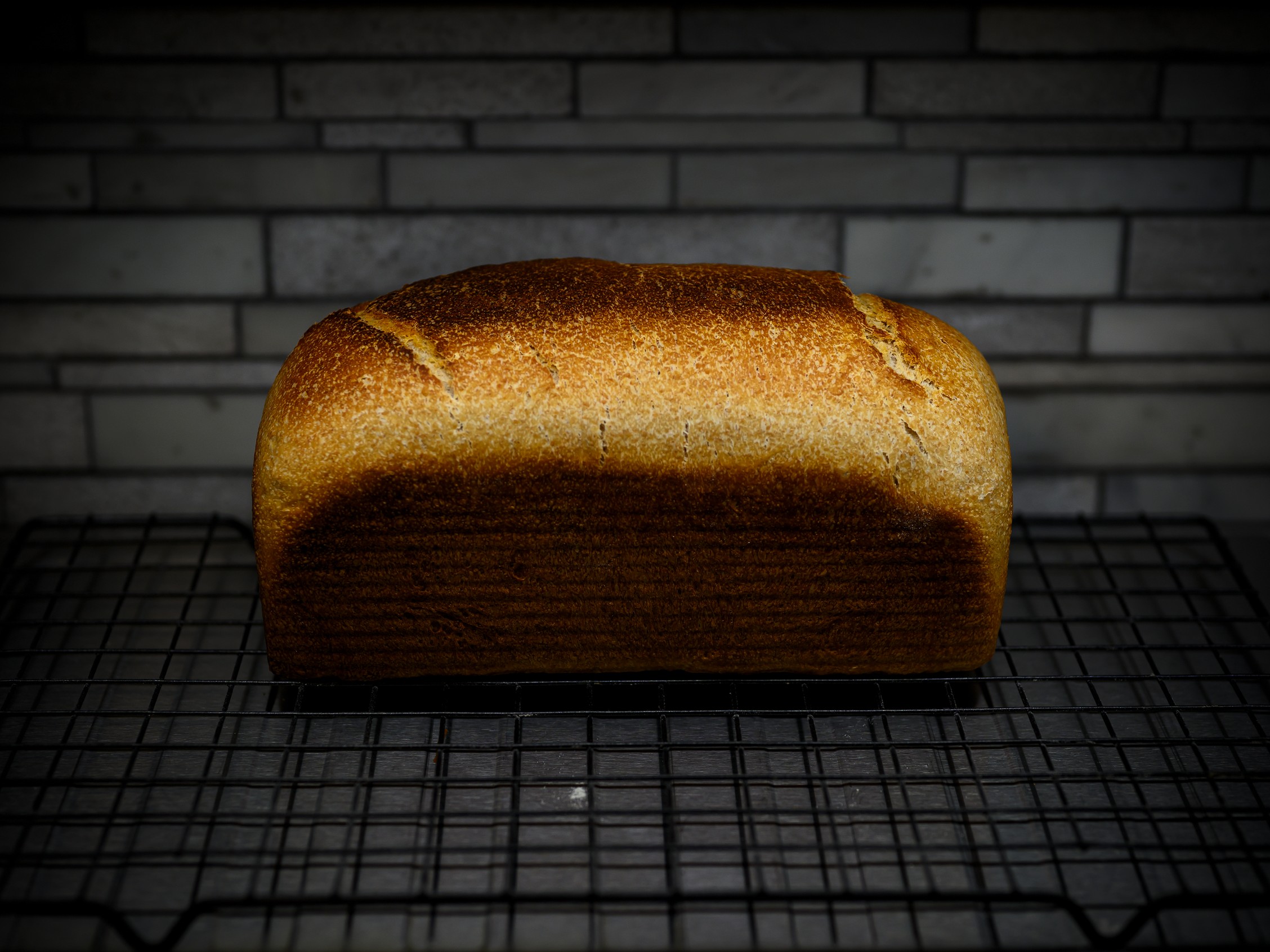
**The Balanced Box** This loaf, a classic sandwich bread variation, shows a consistent crust coloration indicative of precise baking conditions. The exterior has a notable, even browning with slight cracking on the top suggesting adequate oven spring. The shape is beautifully boxy—a testament to effective use of the Pullman pan. The lighting highlights the crisp edges, captured effectively, though a minor shadow on the lower crust hints at uneven heat exposure. Improvement could focus on achieving more uniform coloration on the sides. The choice of the Pullman pan creates a structured environment that controls the bread's expansion, resulting in a perfect square shape. The lid forces an upright rise, limiting lateral spread and encouraging height. This method both increases the loaf's density and maintains its symmetry. The design of the Pullman pan is akin to algorithmic problem solving in programming: it constrains variables (volume and shape) to achieve a desired output. Just as a programmer uses constraints to dictate an algorithm’s behavior, the Pullman pan guides the dough into a precise form. Compared to previous bakes, this loaf achieves a notable improvement in crust evenness, particularly on the top. While earlier attempts displayed more variance, this bake reflects greater control over heat distribution. Addressing the slight shadowing on the sides could further refine this progress.