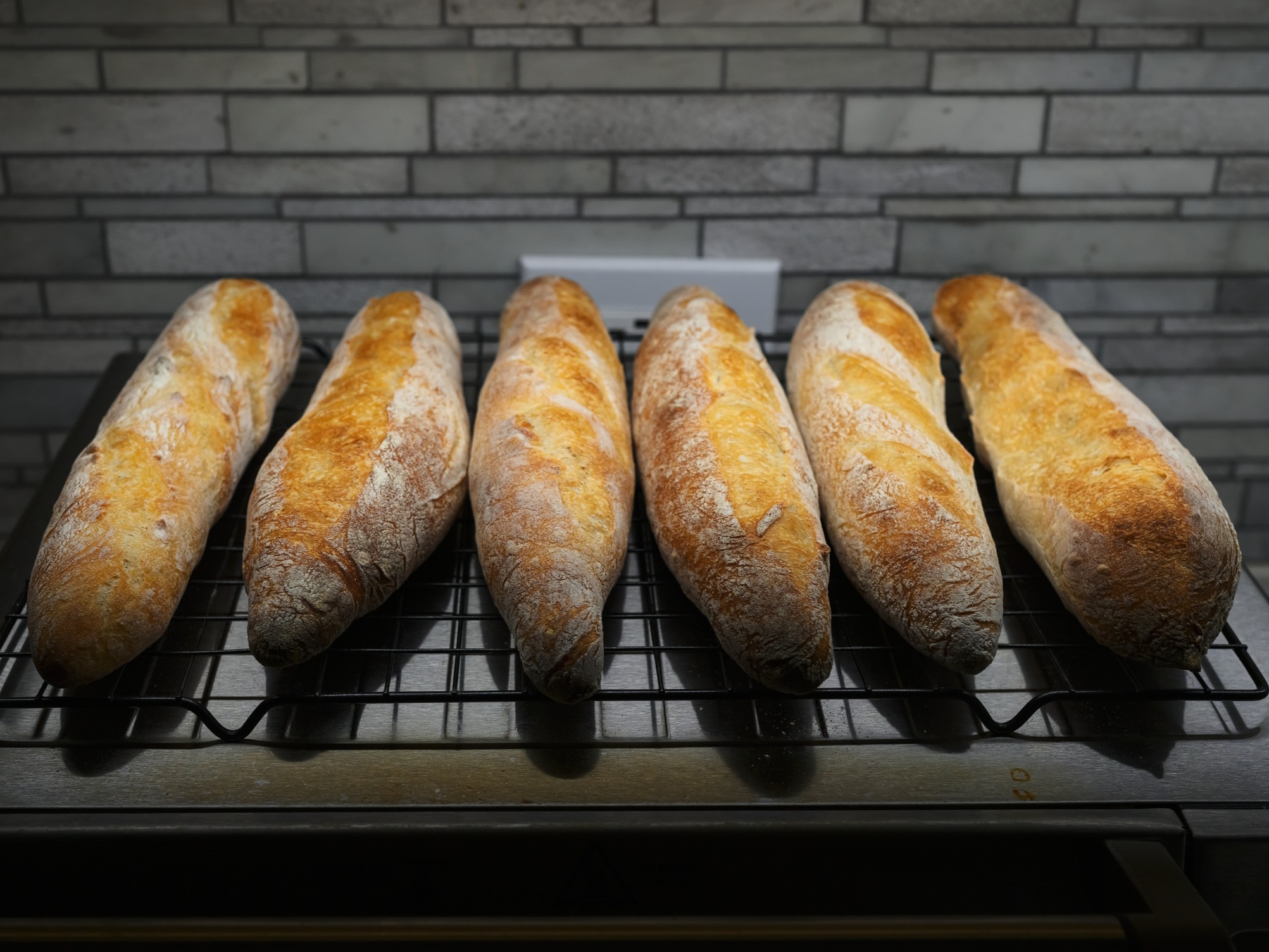
The lighting emphasizes the golden crust with clear contrast against the cooling rack. The baguettes show a decent oven spring with well-executed scoring that encourages the classic ear. Crust appears slightly thick with varied shading, suggesting uneven heat distribution during baking. Symmetry across the loaves is commendable, though one baguette shows minor twisting—a sign of inconsistent shaping. The crumb isn’t visible but hydration indicates potential for open alveoli.
**Symphony of Steam** The lighting emphasizes the golden crust with clear contrast against the cooling rack. The baguettes show a decent oven spring with well-executed scoring that encourages the classic ear. Crust appears slightly thick with varied shading, suggesting uneven heat distribution during baking. Symmetry across the loaves is commendable, though one baguette shows minor twisting—a sign of inconsistent shaping. The crumb isn’t visible but hydration indicates potential for open alveoli. The varied shading on the crust is a result of uneven steam distribution. Steam creates the glossy, thin crust by gelatinizing the surface starches. Ensure consistent steam by using a preheated stone and steaming mechanism like a tray with boiling water. This helps maintain even temperatures and steam levels. Interestingly, the art of baguette making is deeply connected to physics. The proper use of steam in an oven is essentially managing phase transition from water to vapor, affecting heat transfer and crust formation. Compared to the previous bake, these baguettes show improvement in symmetry and ear formation. The crust color has better vibrancy, though the inconsistent thickness remains a challenge. Paying closer attention to steam will likely address this inconsistency.