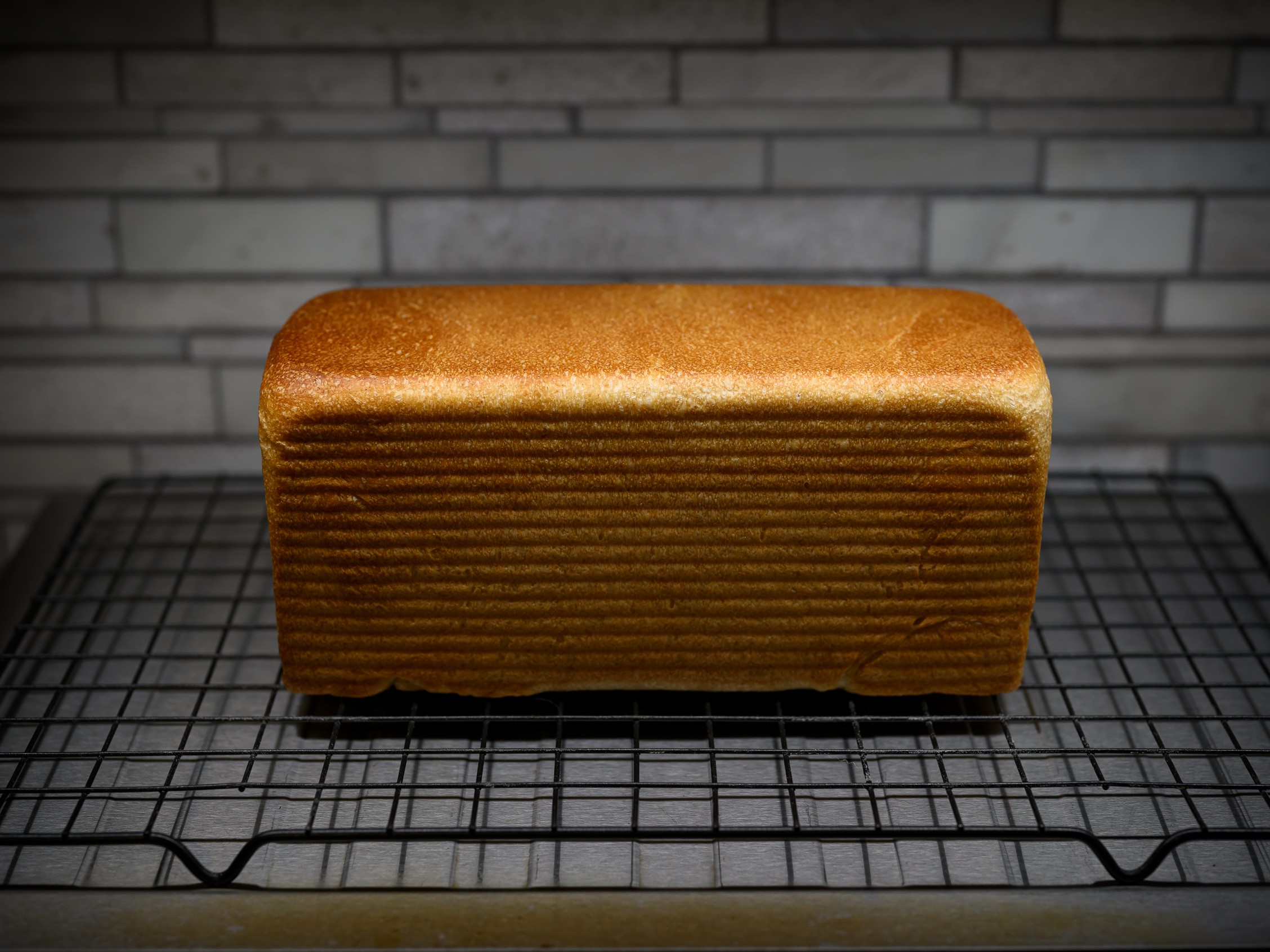
The loaf exhibits a perfectly even coloration, suggesting uniform heat distribution in the oven. The straight lines from the Pullman pan provide a precise and clean aesthetic that speaks to controlled technique. The crust is thin with a gentle sheen, typical of lower hydration loaves. However, the crumb will need closer inspection to assess its density given the relatively low hydration for a whole wheat variation.
**Structured Formality** The loaf exhibits a perfectly even coloration, suggesting uniform heat distribution in the oven. The straight lines from the Pullman pan provide a precise and clean aesthetic that speaks to controlled technique. The crust is thin with a gentle sheen, typical of lower hydration loaves. However, the crumb will need closer inspection to assess its density given the relatively low hydration for a whole wheat variation. The use of a Pullman pan requires particular attention to proofing. In these enclosed pans, the dough must reach an optimal expansion before baking to fill the corners without over-proofing. Proper dough tension during shaping helps achieve the desired form and texture. The Pullman loaf takes its name from railway cars. The bread’s shape and compactness were ideal for maximizing storage and avoiding crumbs during dining car service, paralleling the need for efficiency in engineering designs.