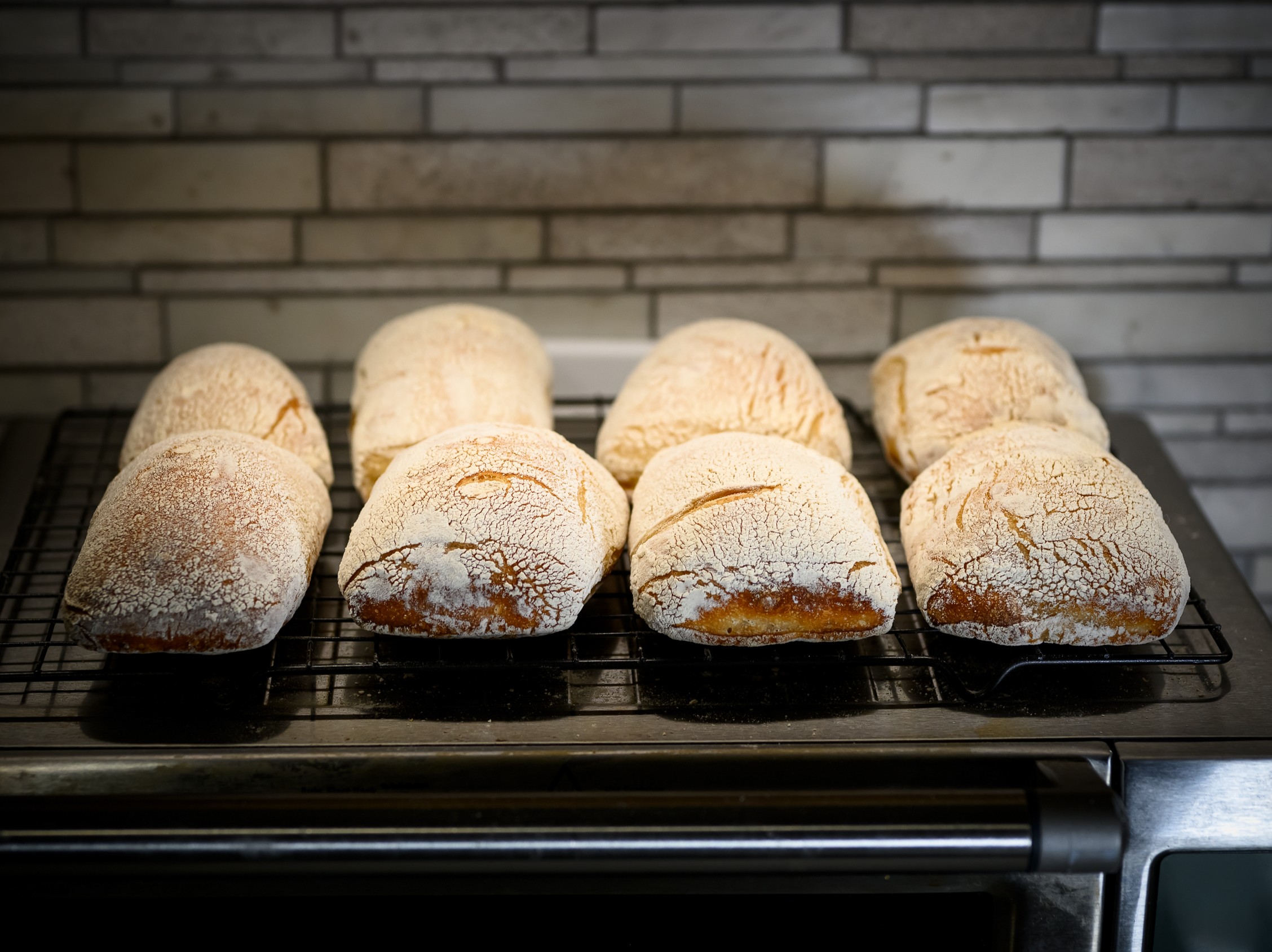
These ciabatta loaves showcase a characteristic flour-dusted crust with a pleasing crackled appearance. The lighting effectively highlights the texture, with shadows adding depth and emphasizing the rustic quality of the bread. The crust is thin and well-browned at the base, indicating good oven spring. However, the loaves are slightly irregular in shape, suggesting room for improvement in dough handling or shaping techniques. The scoring is minimal, as expected for ciabatta, allowing the crust to develop naturally. The hydration appears well-managed, given the even surface and lack of excessive spreading.
**Slipper's Texture** These ciabatta loaves showcase a characteristic flour-dusted crust with a pleasing crackled appearance. The lighting effectively highlights the texture, with shadows adding depth and emphasizing the rustic quality of the bread. The crust is thin and well-browned at the base, indicating good oven spring. However, the loaves are slightly irregular in shape, suggesting room for improvement in dough handling or shaping techniques. The scoring is minimal, as expected for ciabatta, allowing the crust to develop naturally. The hydration appears well-managed, given the even surface and lack of excessive spreading. The unique crackled crust on ciabatta is achieved by the high hydration of the dough combined with a generous dusting of flour before baking. This flour coating prevents the dough's surface from drying too quickly, allowing the interior moisture to create steam pockets that result in the iconic texture. The word 'ciabatta' literally means 'slipper' in Italian, but its creation is relatively recent in bread history. It was developed in 1982 by a baker in Verona, Italy, as a response to the popularity of French baguettes. Compared to previous bakes, this batch shows improvement in crust coloration and crackling, indicating better oven spring and heat management. The loaves' shapes are still somewhat irregular, suggesting further refinement in shaping or proofing consistency is needed.