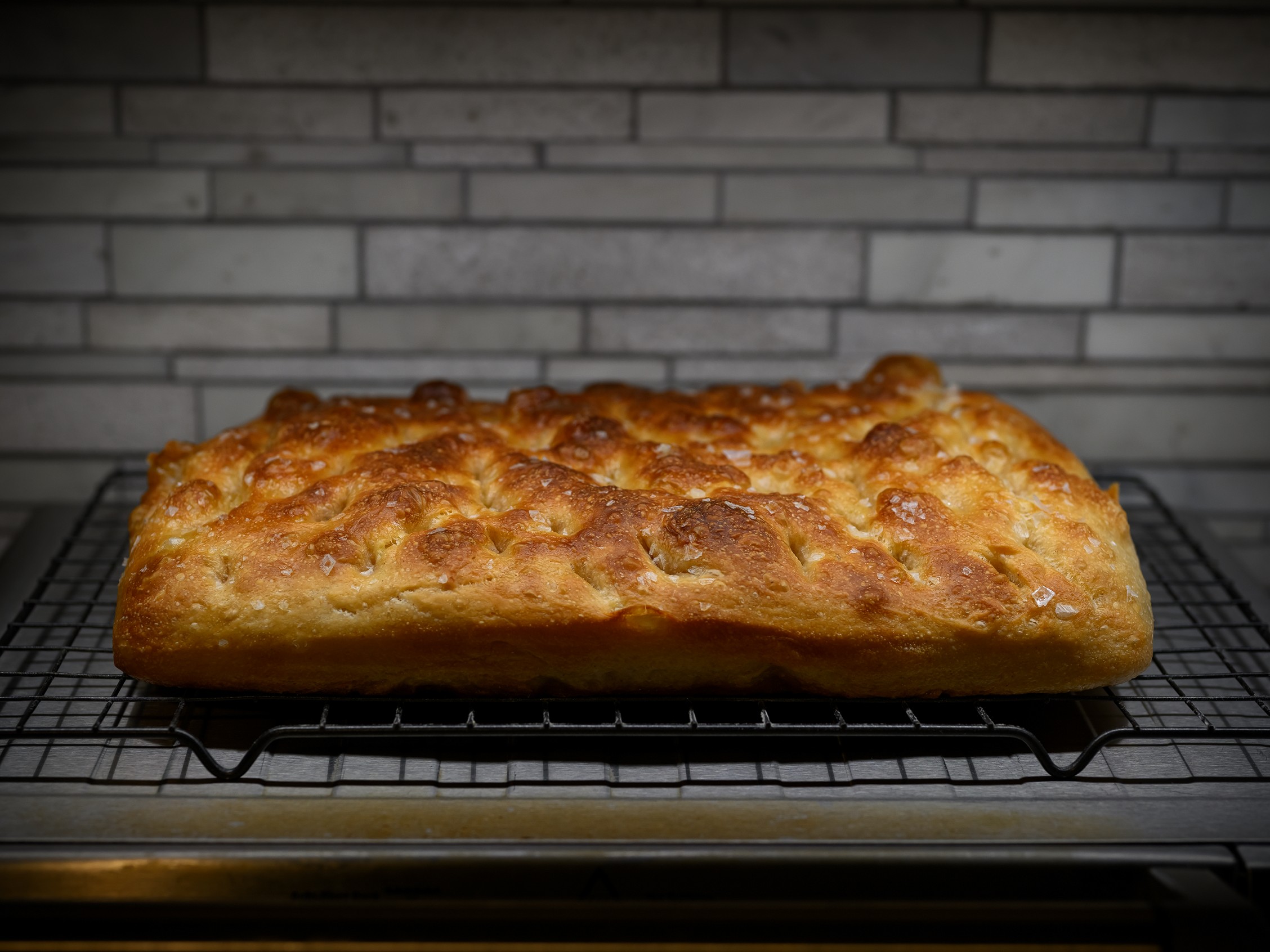
This focaccia presents a warm, golden hue with a beautifully crisp texture that catches the light in the dim, warm-toned setting. The composition is straightforward but effective, showcasing the bread’s inviting surface dotted with salt flakes. The well-defined dimples suggest adequate proofing, allowing for the release of CO2 without compromising the structure. The crust is evenly baked, though slightly uneven in color at the top suggesting some minor variation in oven heat distribution. The crumb, though not visible, likely mirrors the characteristic open structure expected of a 75% hydration dough. Overall, a successful bake, with room to enhance uniform browning.
**Salted Valleys** This focaccia presents a warm, golden hue with a beautifully crisp texture that catches the light in the dim, warm-toned setting. The composition is straightforward but effective, showcasing the bread’s inviting surface dotted with salt flakes. The well-defined dimples suggest adequate proofing, allowing for the release of CO2 without compromising the structure. The crust is evenly baked, though slightly uneven in color at the top suggesting some minor variation in oven heat distribution. The crumb, though not visible, likely mirrors the characteristic open structure expected of a 75% hydration dough. Overall, a successful bake, with room to enhance uniform browning. The hallmark dimples in focaccia are not just for aesthetics; they play a crucial role in preventing overly large bubbles by providing controlled spaces for the dough to expand. This happens as the dough rises and the CO2 is trapped within the defined pockets. Proper dimpling contributes to that classic airy structure, enhancing both texture and flavor. Focaccia shares a historical link with ancient flatbreads, akin to how reggae music shares roots with traditional African rhythms. Both embody the transformation of a foundational style into a recognized cultural emblem, carrying simplicity and depth in their evolution.