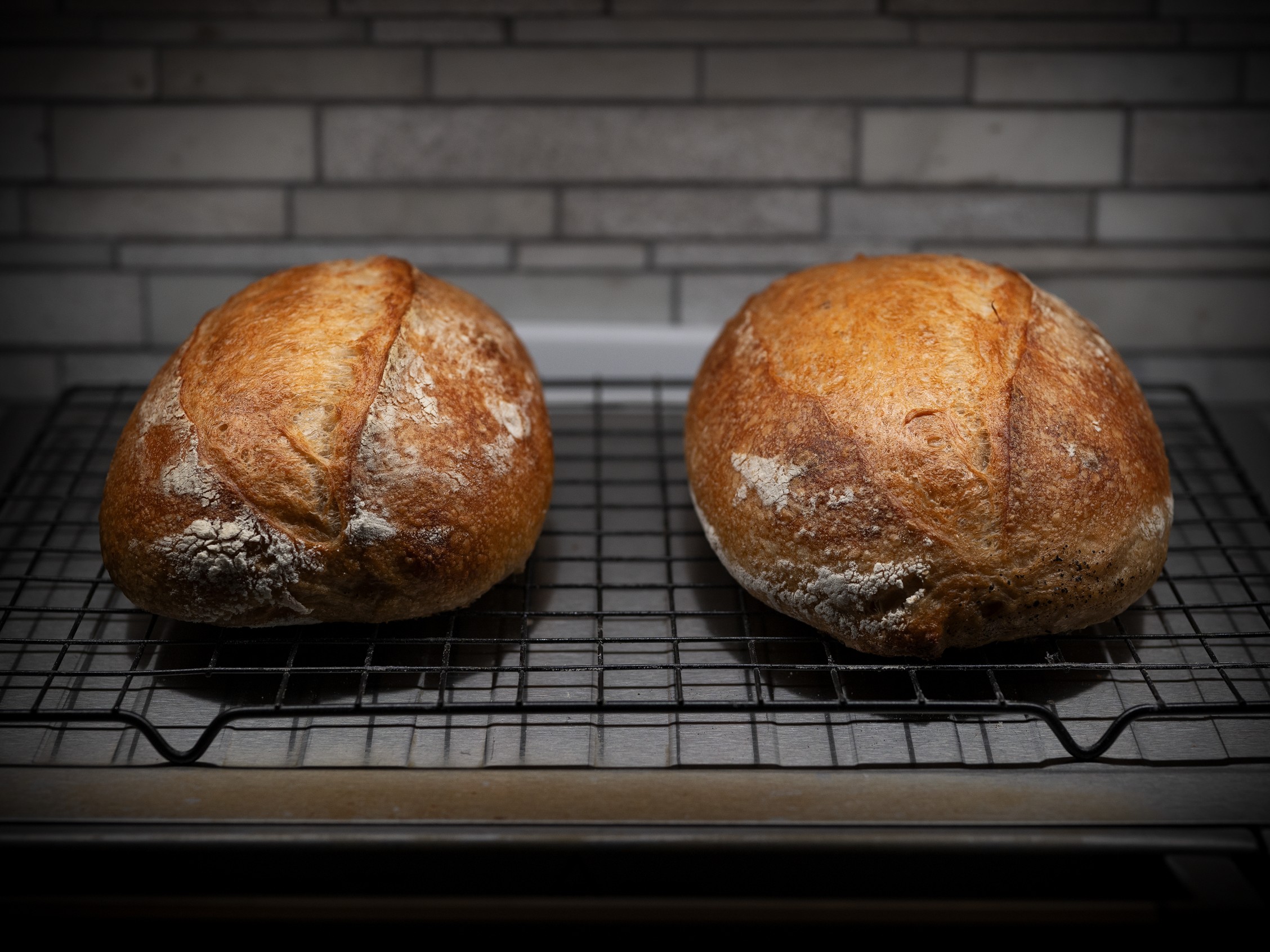
The two Campesino loaves showcase a well-developed crust with a pleasing, even color indicative of thorough Maillard reaction. The lighting accentuates the crust’s caramel tones and the gentle arc of each loaf's surface. Scoring is deep and decorative, resulting in nicely formed ears, especially on the left loaf. The symmetry is commendable, though the left loaf shows slightly more oven spring, suggesting minor variations in fermentation or shaping. The crumb is not visible, but crust texture and ear development suggest robust internal structure.
**Rustic Duality** The two Campesino loaves showcase a well-developed crust with a pleasing, even color indicative of thorough Maillard reaction. The lighting accentuates the crust’s caramel tones and the gentle arc of each loaf's surface. Scoring is deep and decorative, resulting in nicely formed ears, especially on the left loaf. The symmetry is commendable, though the left loaf shows slightly more oven spring, suggesting minor variations in fermentation or shaping. The crumb is not visible, but crust texture and ear development suggest robust internal structure. The visual evidence of the deep scoring leading to well-formed ears speaks to the impact of sufficient proofing. Proper proofing allows the dough to expand optimally, creating defined patterns post-bake. It balances the development of the gluten network and the retention of gases. The Campesino bread draws its influence into music culture. In Cuban traditional music, rural themes are often celebrated, much like the rustic simplicity celebrated in Campesino loaves. Both evoke a connection to the land and heritage. Compared to previous bakes, these loaves demonstrate consistent improvements in oven spring and ear definition, particularly noticeable on the left loaf. Past issues with uneven shape and scoring execution have clearly been addressed, heightening visual appeal and likely crumb structure.