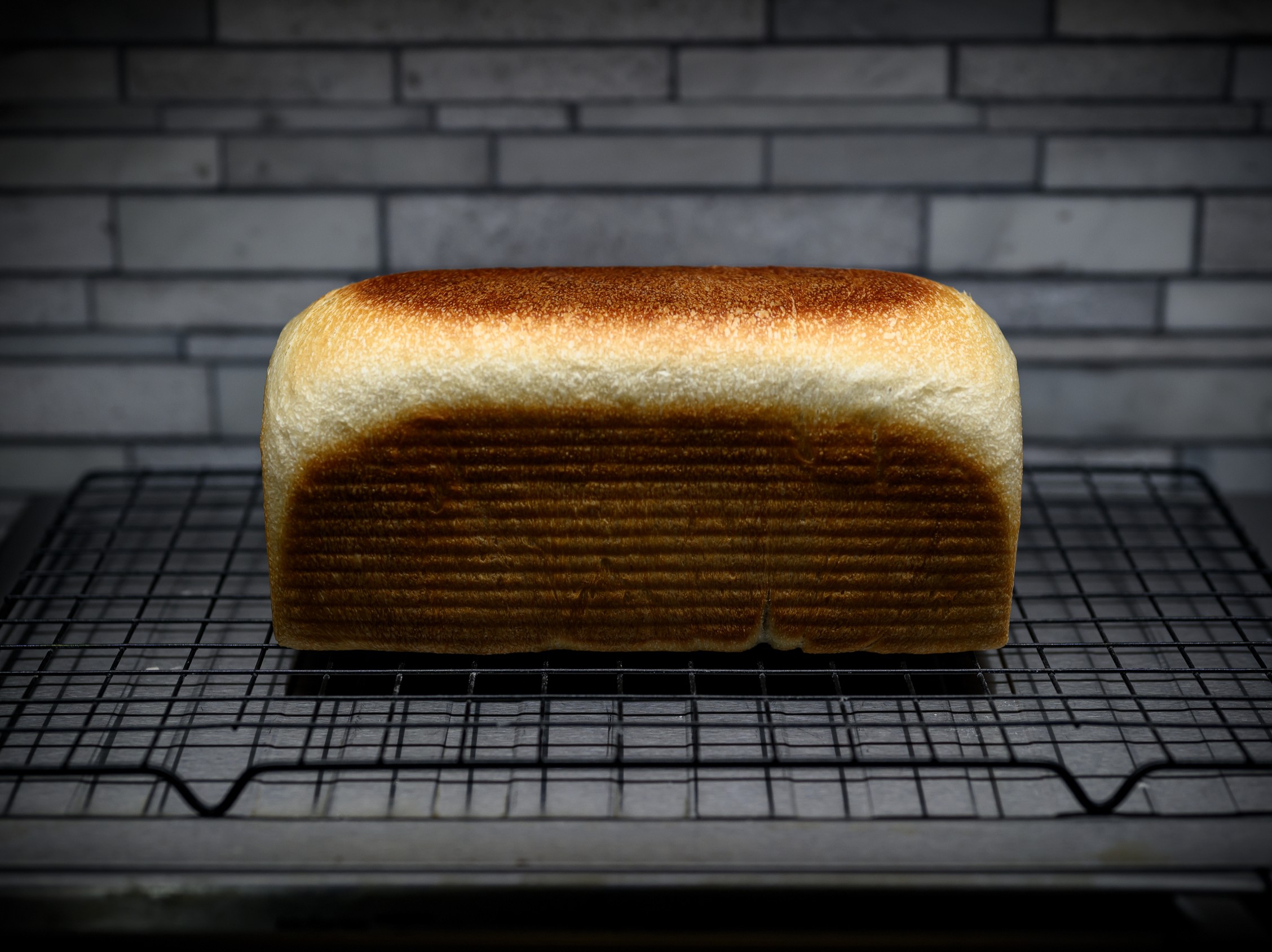
This sandwich loaf is a textbook example of precision baking, captured beautifully with its striking linear symmetry. The crust is a deep, even golden brown on top, transitioning smoothly to a lighter hue on the sides due to the Pullman pan's design. The ridges are pronounced and uniform, indicating consistent heat and dough expansion. The shape is immaculate, with clean edges and a flat top, suggesting well-managed dough proofing and baking. One area for potential improvement could be achieving a slightly more open crumb by adjusting hydration or fermentation time.
**Linear Perfection** This sandwich loaf is a textbook example of precision baking, captured beautifully with its striking linear symmetry. The crust is a deep, even golden brown on top, transitioning smoothly to a lighter hue on the sides due to the Pullman pan's design. The ridges are pronounced and uniform, indicating consistent heat and dough expansion. The shape is immaculate, with clean edges and a flat top, suggesting well-managed dough proofing and baking. One area for potential improvement could be achieving a slightly more open crumb by adjusting hydration or fermentation time. The Pullman pan is designed to create a perfectly square loaf, which is ideal for sandwich bread. Its lid forces the dough to rise evenly and creates a uniform crust. This method not only affects shape but also influences the crumb texture, often resulting in a tighter crumb structure due to the restriction. The Pullman loaf, also known as a pain de mie, was named after the Pullman railway cars. The compact, square shape of the bread allowed it to fit neatly into the limited space of the train’s kitchen, maximizing storage and minimizing waste. Compared to previous bakes, this loaf maintains the same precision in shape and crust color, but shows a more controlled and consistent browning across the top. The ridges appear slightly more defined, suggesting improved dough handling or even heat distribution during baking.