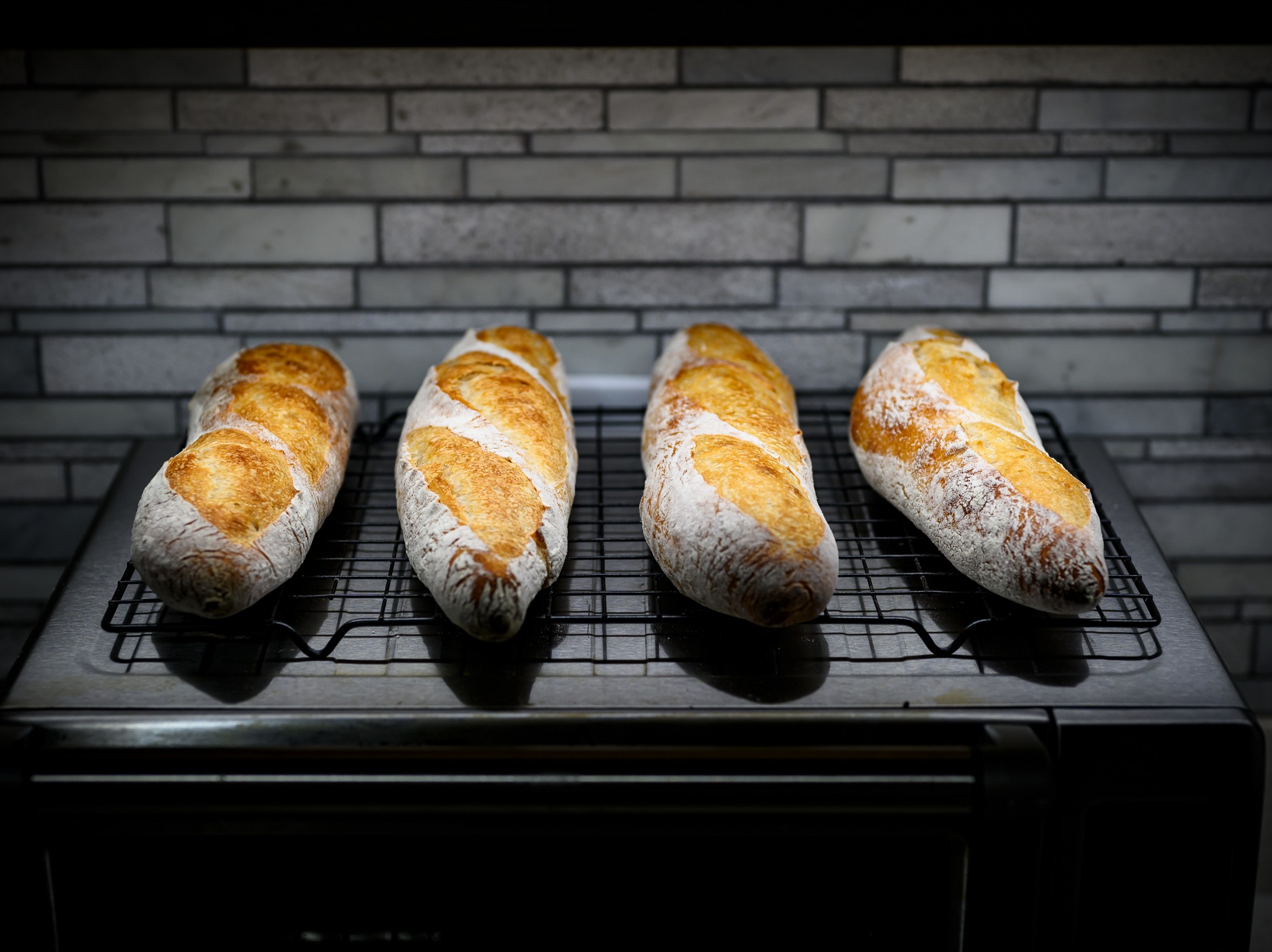
The image exhibits four sourdough baguettes aligned on a cooling rack, positioned against a patterned tile backdrop. The lighting casts a warm glow, accentuating the golden crust and the precise scoring. Each baguette displays a consistent ear and well-developed bloom, suggesting strong oven spring. The flour-dusted surfaces emphasize contrast and lend a rustic touch. However, some unevenness in size across the baguettes hints at variations in shaping consistency.
**Golden Lines of Crunch** The image exhibits four sourdough baguettes aligned on a cooling rack, positioned against a patterned tile backdrop. The lighting casts a warm glow, accentuating the golden crust and the precise scoring. Each baguette displays a consistent ear and well-developed bloom, suggesting strong oven spring. The flour-dusted surfaces emphasize contrast and lend a rustic touch. However, some unevenness in size across the baguettes hints at variations in shaping consistency. Consistent bloom and ear formation are clear indicators of proper fermentation and precise scoring. Ensuring the dough is slightly taut when shaping allows it to expand in controlled areas where cuts are made. This directs the energy upwards during baking, enhancing oven spring and creating those desirable ears. The traditional French baguette gained popularity only after World War II when an early morning commercial bread law made it illegal for bakers to work before 4 a.m., prompting the necessity for bread that could be baked rapidly. Compared to previous batches, these baguettes show marked improvement in color and scoring precision. The crust is more evenly browned and the scoring has led to better ear development. Continued practice in forming has paid off, though a bit more focus on size consistency would further enhance the visual presentation.