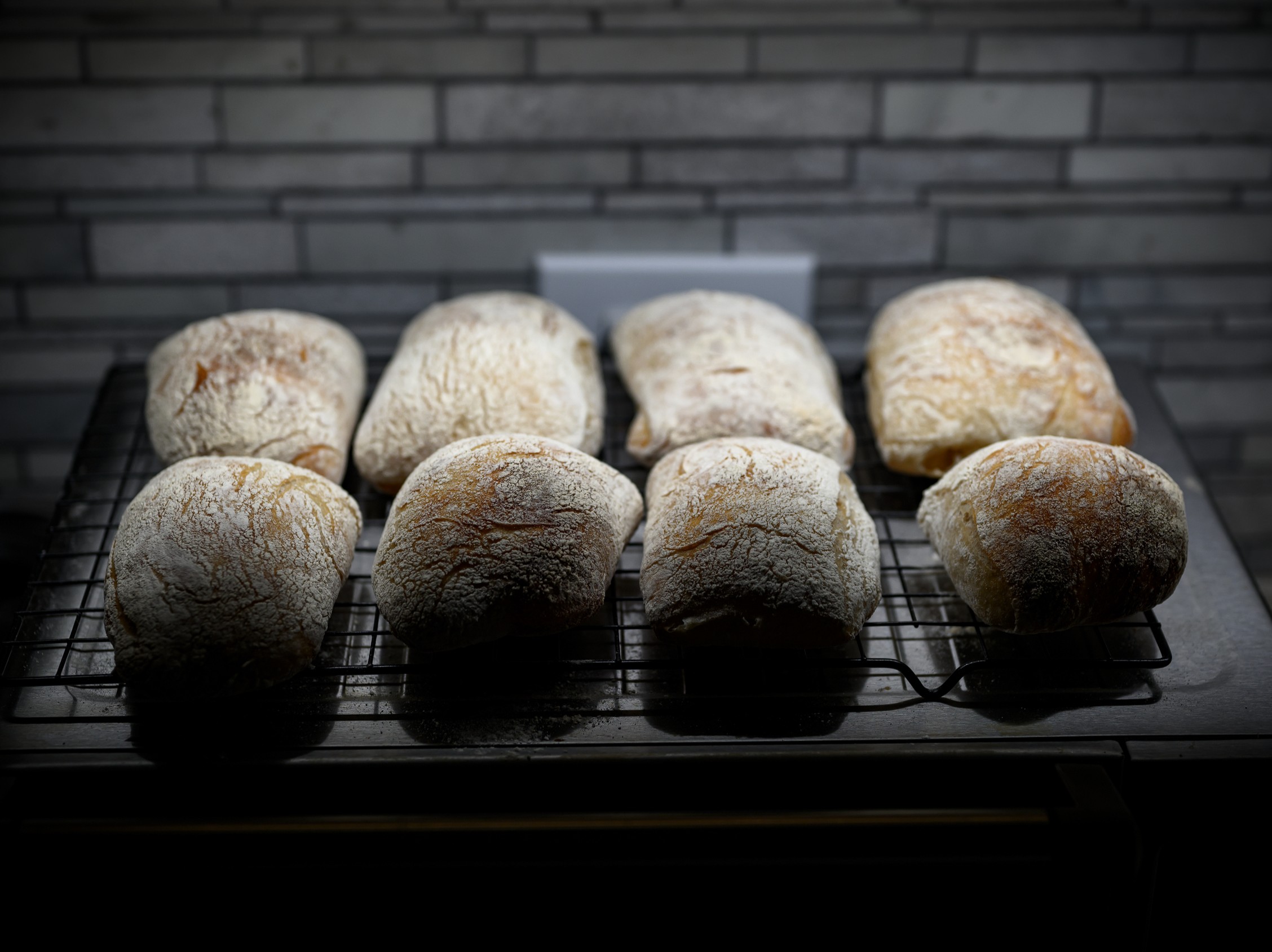
This image captures a lineup of ciabatta loaves, each with a distinct flour-dusted crust. The lighting is soft, creating a gentle contrast that highlights the rustic texture. The crusts exhibit a pale, crackled appearance, indicating a successful hydration level but possibly a shorter bake time leading to less browning. The shape is consistent, though slightly flat, suggesting room for more oven spring. The scoring is subtle, allowing the natural tear of the crust to take center stage.
**Flour-Dusted Harmony** This image captures a lineup of ciabatta loaves, each with a distinct flour-dusted crust. The lighting is soft, creating a gentle contrast that highlights the rustic texture. The crusts exhibit a pale, crackled appearance, indicating a successful hydration level but possibly a shorter bake time leading to less browning. The shape is consistent, though slightly flat, suggesting room for more oven spring. The scoring is subtle, allowing the natural tear of the crust to take center stage. The pale crusts and flour-dusted surfaces hint at a common ciabatta technique: high hydration and minimal handling. This results in a light, airy crumb but can sometimes lead to less pronounced crust coloring. Adjusting oven temperature or bake time can enhance coloration without compromising the delicate crumb. The ciabatta, meaning 'slipper' in Italian, was created in 1982 by a baker near Venice as a response to the popularity of French baguettes. Its slipper-like shape is a nod to its name and showcases the Italian focus on texture and open crumb. Compared to previous bakes, this batch maintains the ciabatta's rustic appearance and consistent shape but still struggles with achieving deeper browning. While the flour-dusted crackling is appealing, the crust could benefit from additional color, perhaps by slightly extending the bake time. The even distribution of loaves on the rack shows improved spacing and arrangement.