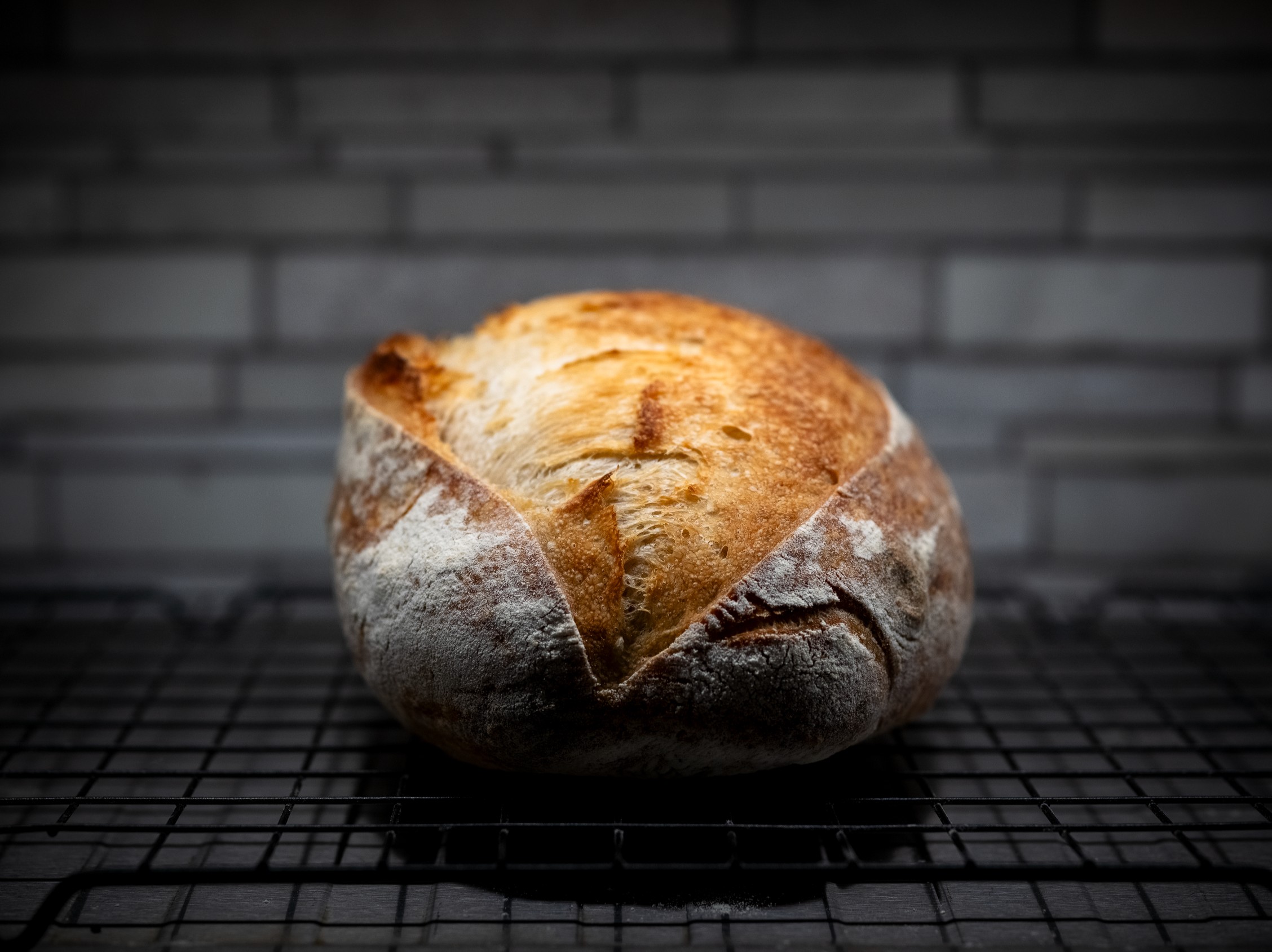
This loaf displays a beautifully developed crust with a deep, rich golden color. The scoring has been executed with precision, allowing for an impressive ear that stands proudly. The lighting emphasizes the texture and color contrasts, making the loaf appear both rustic and inviting. The shape is well-maintained, showing good oven spring and a balanced form, which suggests proper fermentation and gluten development. However, it would be beneficial to see the crumb to fully assess the internal structure and hydration effects.
**Crust's Bold Journey** This loaf displays a beautifully developed crust with a deep, rich golden color. The scoring has been executed with precision, allowing for an impressive ear that stands proudly. The lighting emphasizes the texture and color contrasts, making the loaf appear both rustic and inviting. The shape is well-maintained, showing good oven spring and a balanced form, which suggests proper fermentation and gluten development. However, it would be beneficial to see the crumb to fully assess the internal structure and hydration effects. The sharp ear on this loaf is a testament to effective scoring. When you score the dough, you're directing the path of least resistance for the expanding gases during baking. A well-executed score allows the dough to expand without tearing unpredictably, leading to better oven spring and a more aesthetically pleasing result. The term 'levain' is derived from the French word for 'leaven,' which itself originates from the Latin 'levare,' meaning 'to raise.' This etymology highlights the transformative power of sourdough, which has been used for centuries to leaven bread naturally, long before commercial yeast was available. Compared to the previous bake, this loaf shows a marked improvement in crust color and ear development. The precision in scoring has also advanced, contributing to a more refined oven spring. Focusing on crumb structure in future bakes could further elevate this bread.